
If you have to be ill anywhere in the world, Spain is a good place to be. Our hosts have been checking in with us, and offering to get a doctor or anything else that we need. One of our hosts is a teacher and he told Gord that many people are ill in town. That day only four out of thirteen kindergarten students showed up to class. No one is saying the word “COVID”, but it is understood.
The last time I was ill in Spain I had just turned four. My sister Joan was babysitting Sheila and I at the Spanish campground where we were staying. I had a sudden terrible ear infection and was in agony. Without any common language Joan turned to a Spanish family who arranged for a doctor and comforted all of us until my parents returned.
Our previous travels in Spain have not given us a clear understanding of Spanish culture or its people. Not that such generalizations are ever really accurate, but in most places we visit impressions emerge. On the Via de la Plata we have been generally greeted with warmth and kindness. Rooms were quickly cleaned on a rainy day so that I could check in at a hostel at ten in the morning. Villagers emerged from their houses the minute we headed off on a road that deviated from the Camino, pointing us back in the right direction. And a woman doing inventory at the supermarket when they were officially closed offered to let us come in if we needed a few things. The Spaniards we meet are almost always quite formal at first, but quickly the humour or kindness cracks through their initial serious veneer.
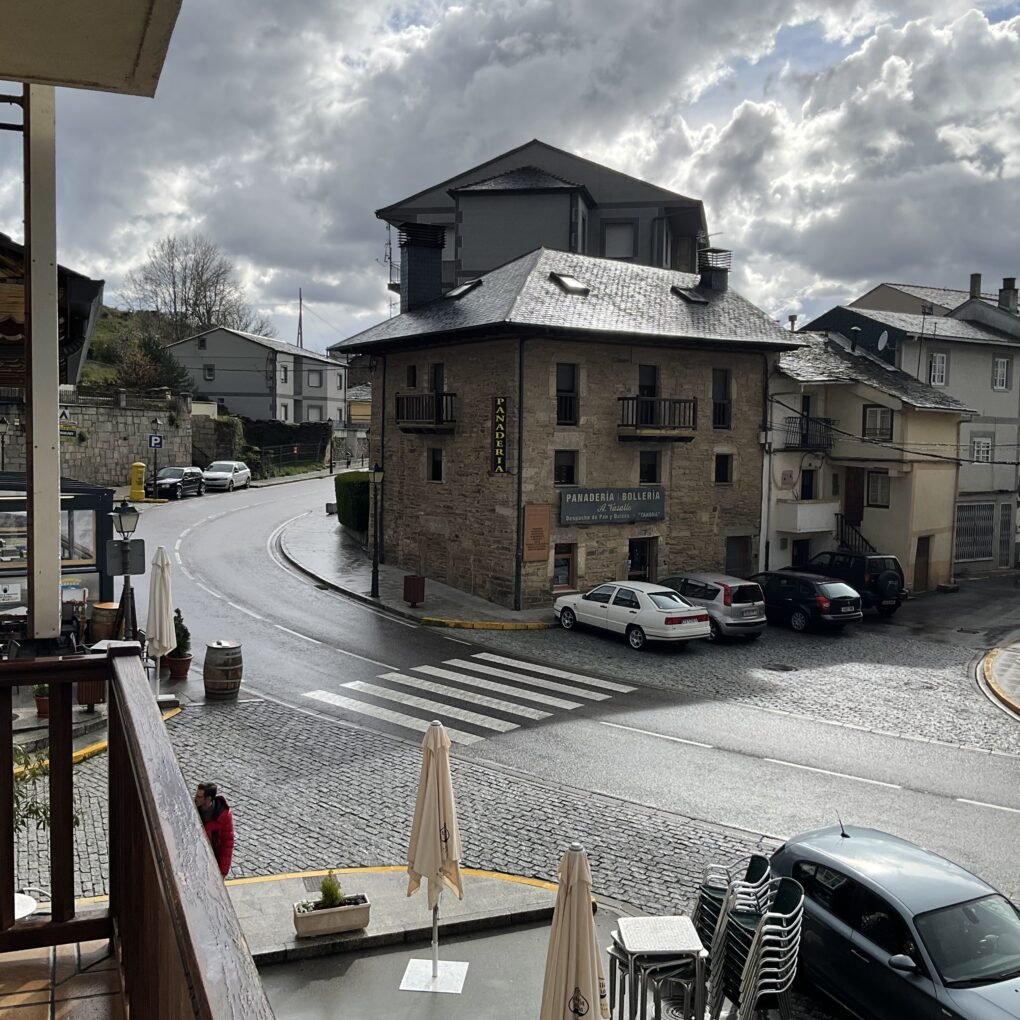
Today is day six of having “cold” and “flu” symptoms, but my fever is gone and I’m starting to feel better. Unfortunately I have a lingering cough that needs to improve before I will attempt cycling. We have remained in Puebla de Sanabria where we have everything we need, and hosts that say we can stay as long as we have to. If I had to get COVID, this is a good place to be.
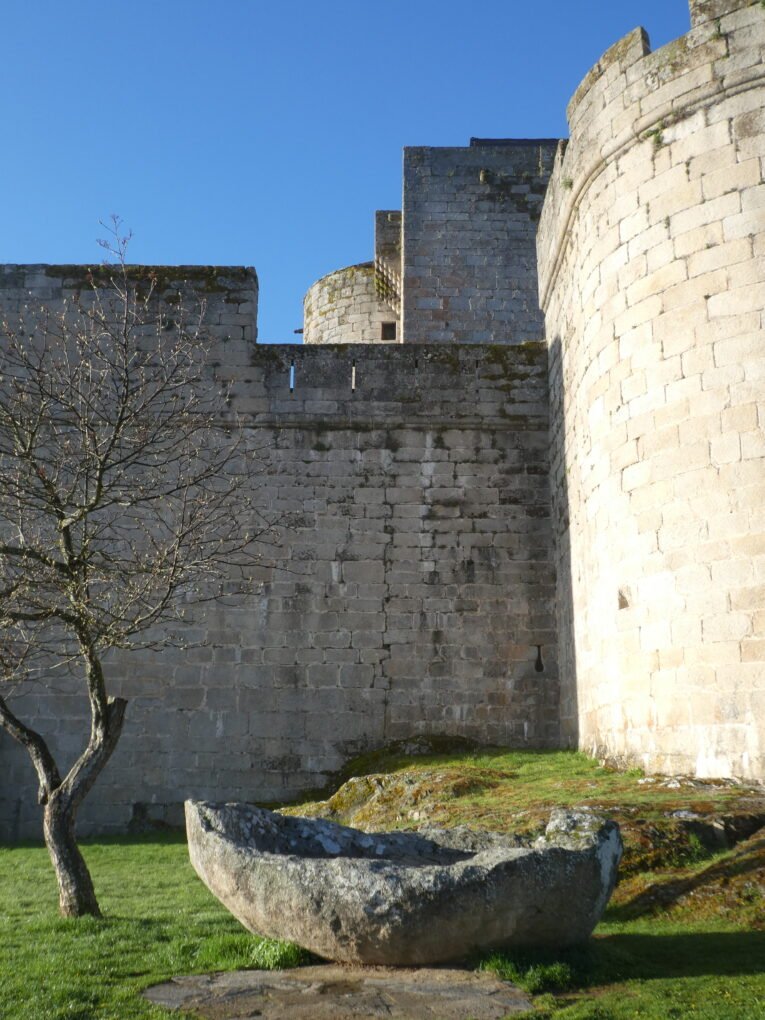
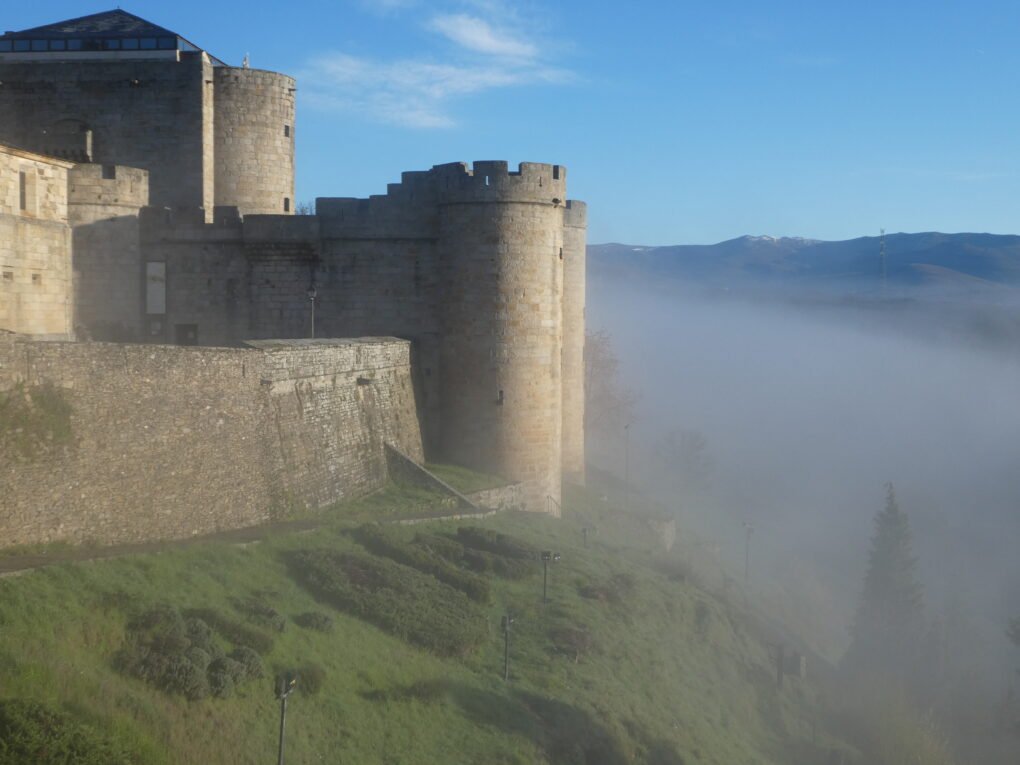
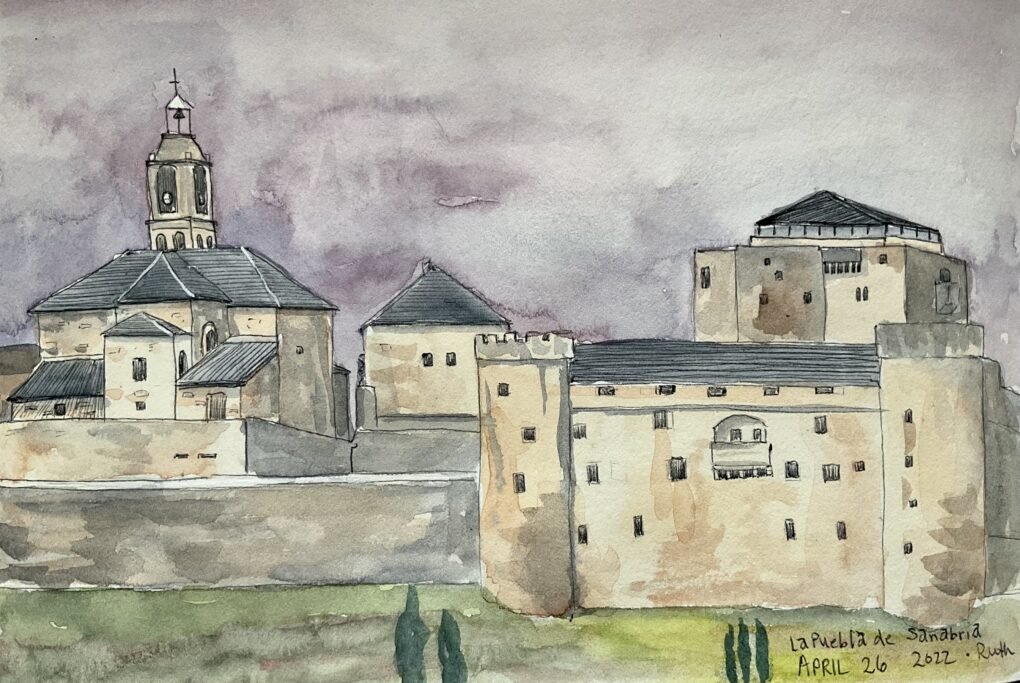
Gordon: Visitors to Galicia are familiar with “stone boats”. One of them brought the body of St. James to Galicia, and another one bore the Virgin Mary to Muxia to encourage St. James in his work. Puebla de Sanabria also has a story regarding the stone boat just outside the castle walls. Christ apparently came to a town upstream of Puebla de Sanabria dressed as a beggar. All doors in the town were closed to him except for those of three bakers. To punish the town Christ struck a rock with his staff, causing water to gush forth. The water inundated the town and only Christ and the three bakers were saved by riding the torrent in a stone boat. It came to rest in the locale that became Puebla de Sanabria. I’m not sure how the residents of the town upstream feel about this story.
Recent Posts
From the heat in Toulouse to the fresh air in Victoria
catching the cooler morning air Ruth: On our last day in Toulouse the temperature rose to 39 degrees. It was not the feared 41 degrees...
A Taste of the Chemin de Le Puy
June 17, 2026 - Buzet-sur-Baïse to Agen - 29 kms - Le Cœur d'Agen apartment June 18, 2026 - Agen to Auvillar - 33 kms...
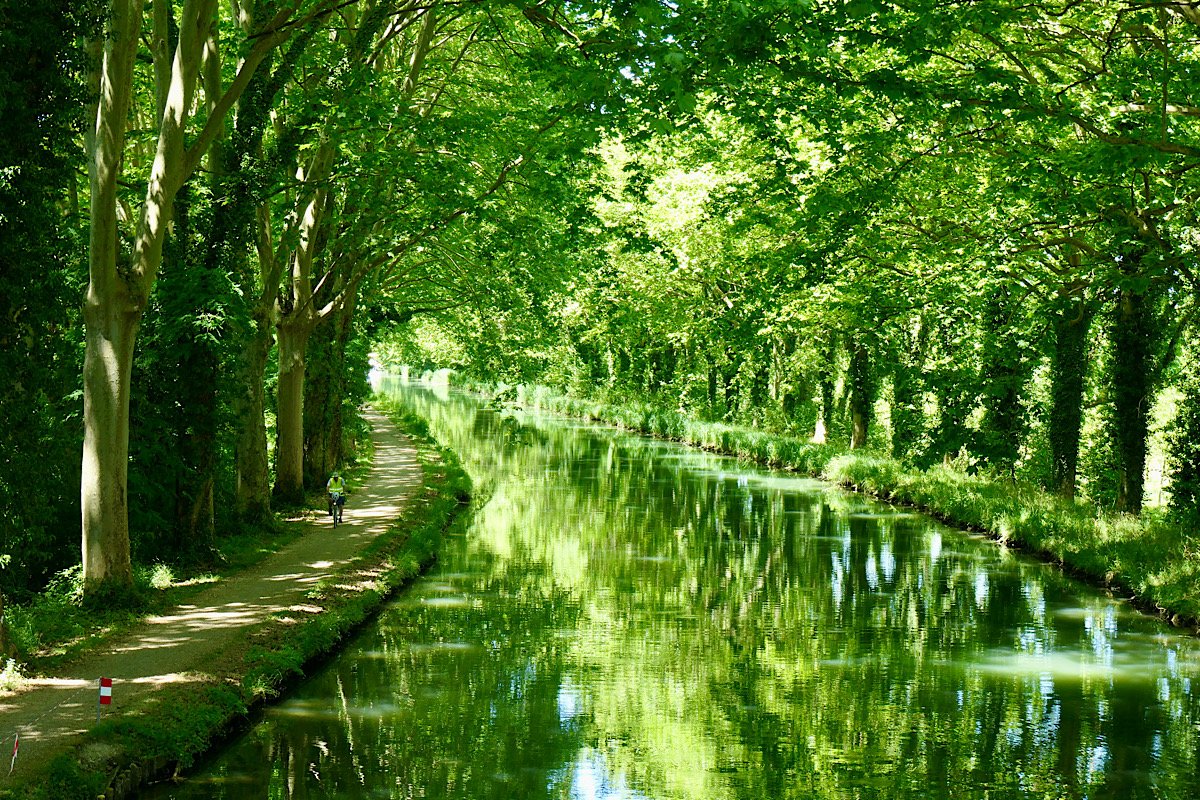
Walking and Riding the Canal
June 14, 2026 - near La Sauve to near Morizès - 32 kms - L'Atelier des Rêves June 15, 2026 - near Morizès to near...
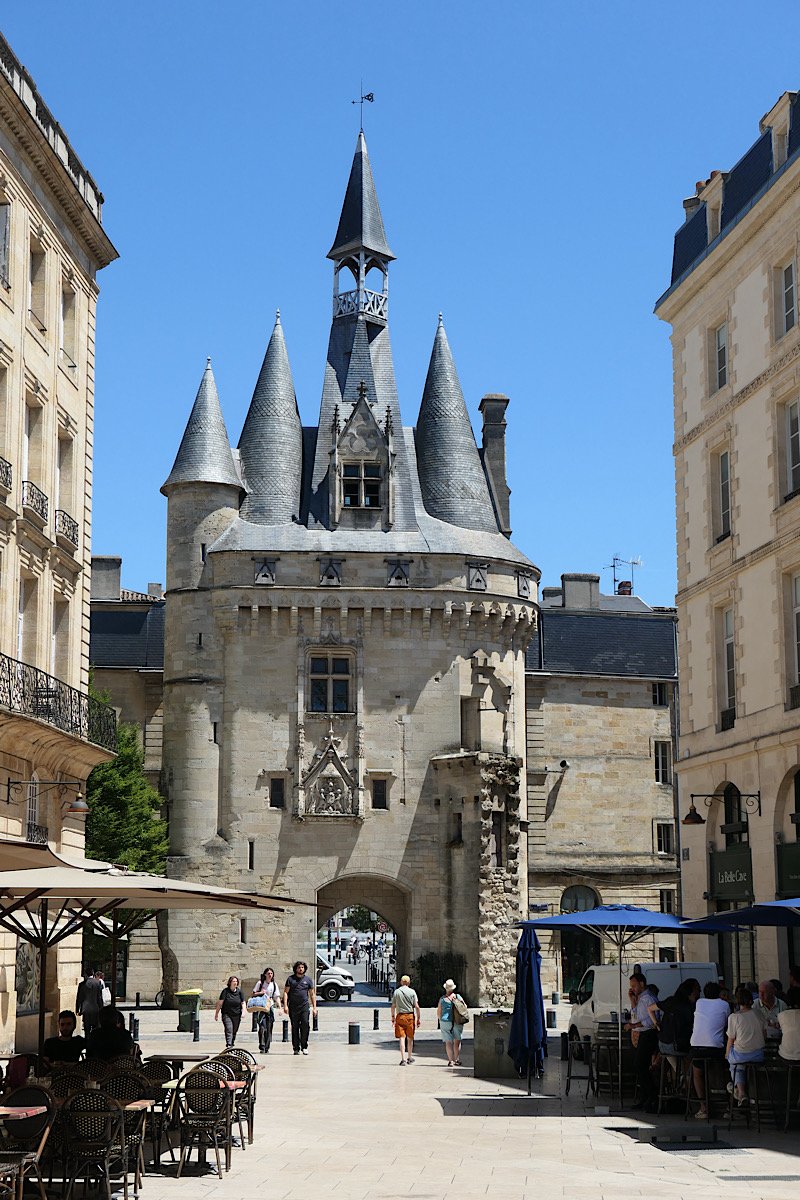
We are not quite finished yet: Le Canal des 2 Mers à Vélo
Bordeaux June 12, 2026 - tourist day in Bordeaux - Unforgettable Stay Heart of Bordeaux apartment June 13, 2026 - Bordeaux to near La Sauve...
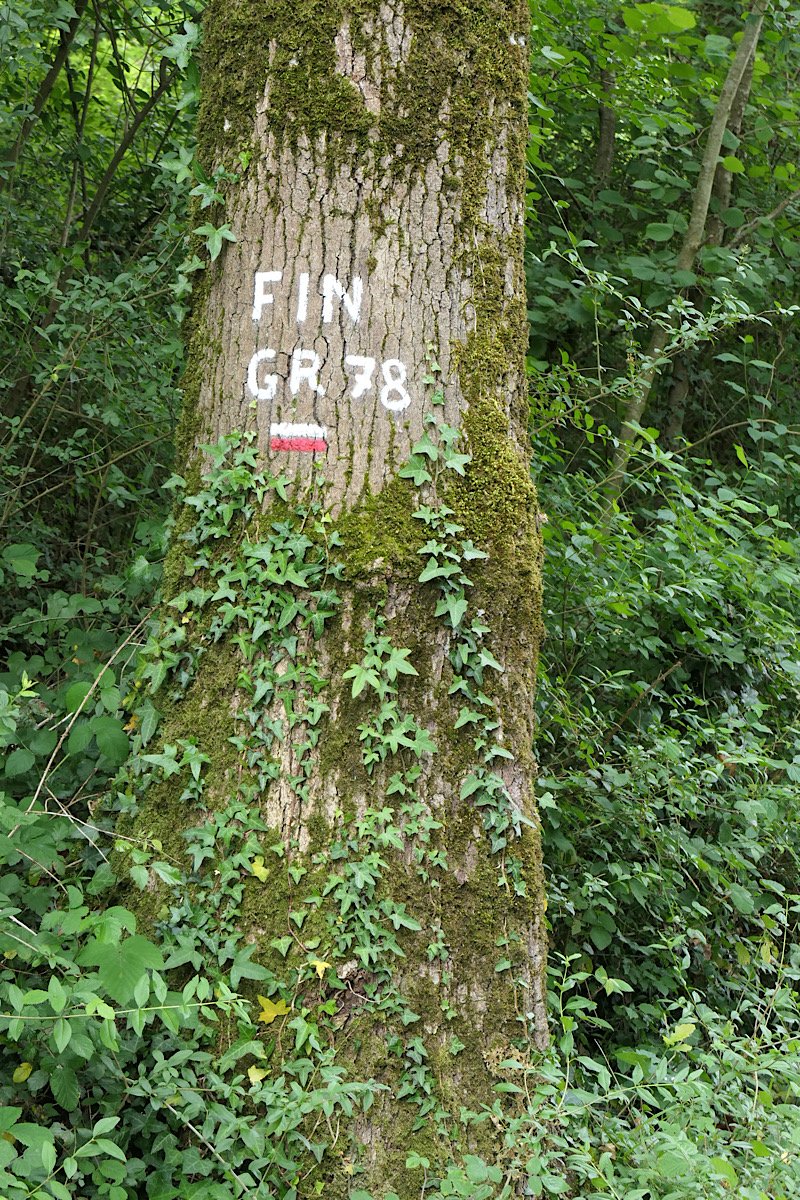
Saint-Jean-Pied-de-Port
June 9, 2026 - Mauléon-Licharre to Larceveau - 27 kms - Logis Hotel Restaurant Espelletenia June 10, 2026 - Larceveau to Saint-Jean-Pied-de-Port - 25 kms...